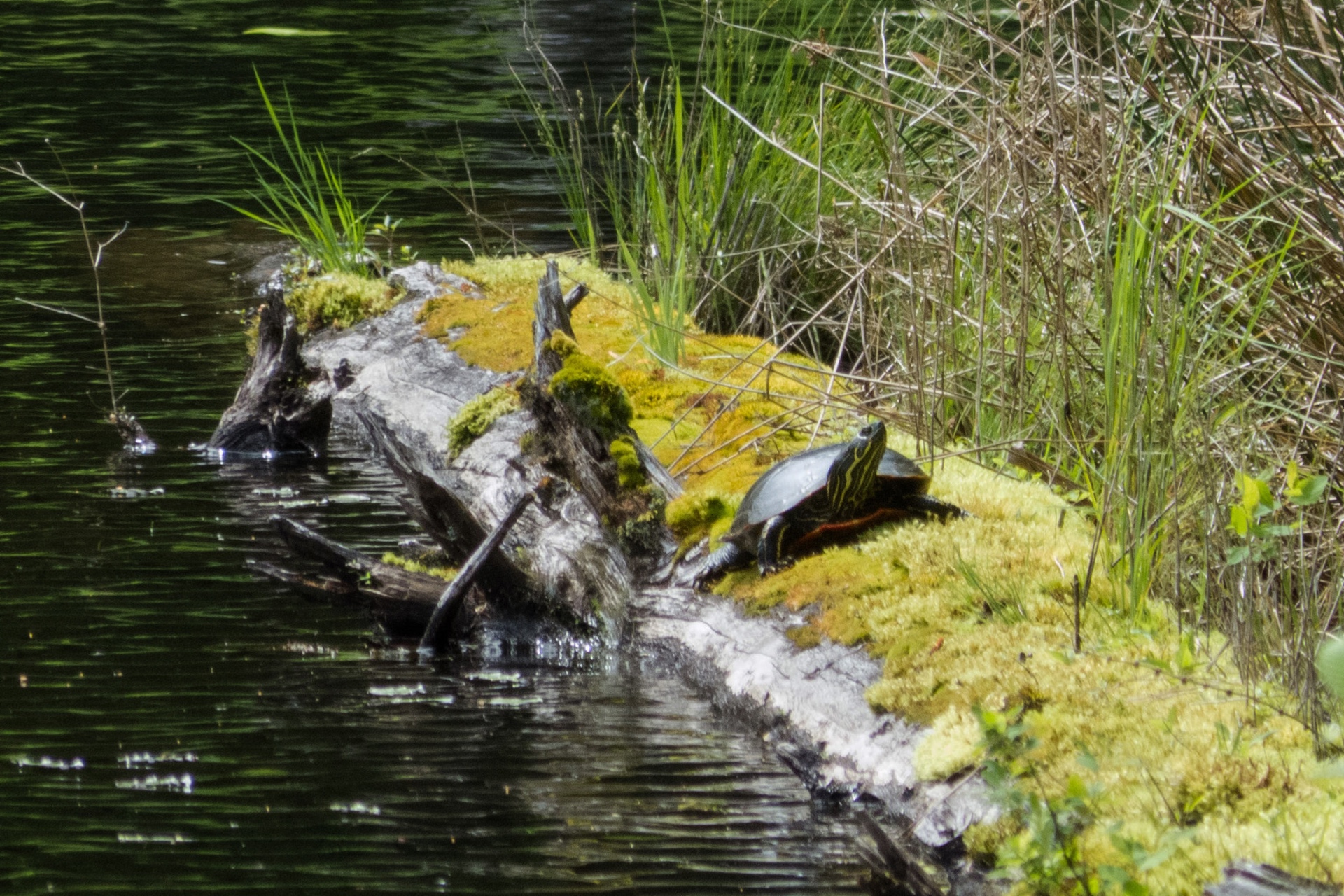
Western Painted Turtle
Key human threats identified are the destruction and fragmentation of aquatic and riparian habitats due to development pressures. Road expansion can also cause these highly vulnerable species to be struck and killed, especially females in search of terrestrial nesting grounds and hatchlings moving overland.
“Although most nesting and terrestrial movements occur within 150 m of aquatic habitat, characteristics of terrestrial habitat up to approximately 340 m from the water’s edge can be integral to the survival and population maintenance of most freshwater turtle species, including Western Painted Turtles.”Western Painted Turtle (Chrysemys picta bellii) Pacific Coast population: recovery strategy proposed 2018 — Table 2
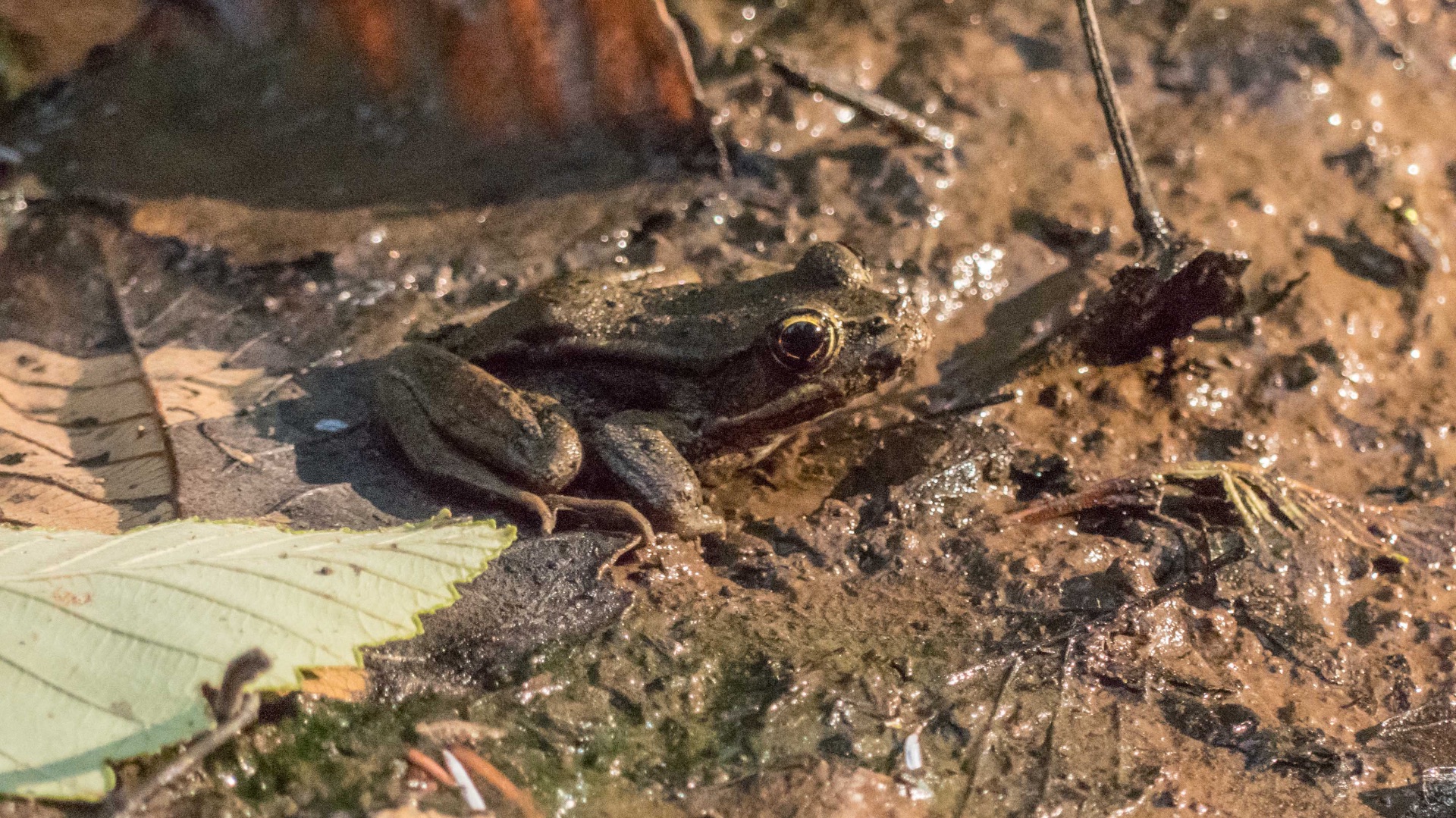
Northern Red-Legged Frog
British Columbia’s October 2015 management plan for the Northern Red-Legged Frog (Rana aurora) outlines strategies to maintain self-sustaining, ecologically functioning populations across its native range.
Protection needs to include aquatic and terrestrial habitats and migration corridors. Individuals may disperse up to 5 kilometres from their breeding pools. Protecting these lands would support stewardship and conservation efforts.