Beaver Ponds
Beaver-created wetland habitat and hydrologic importance
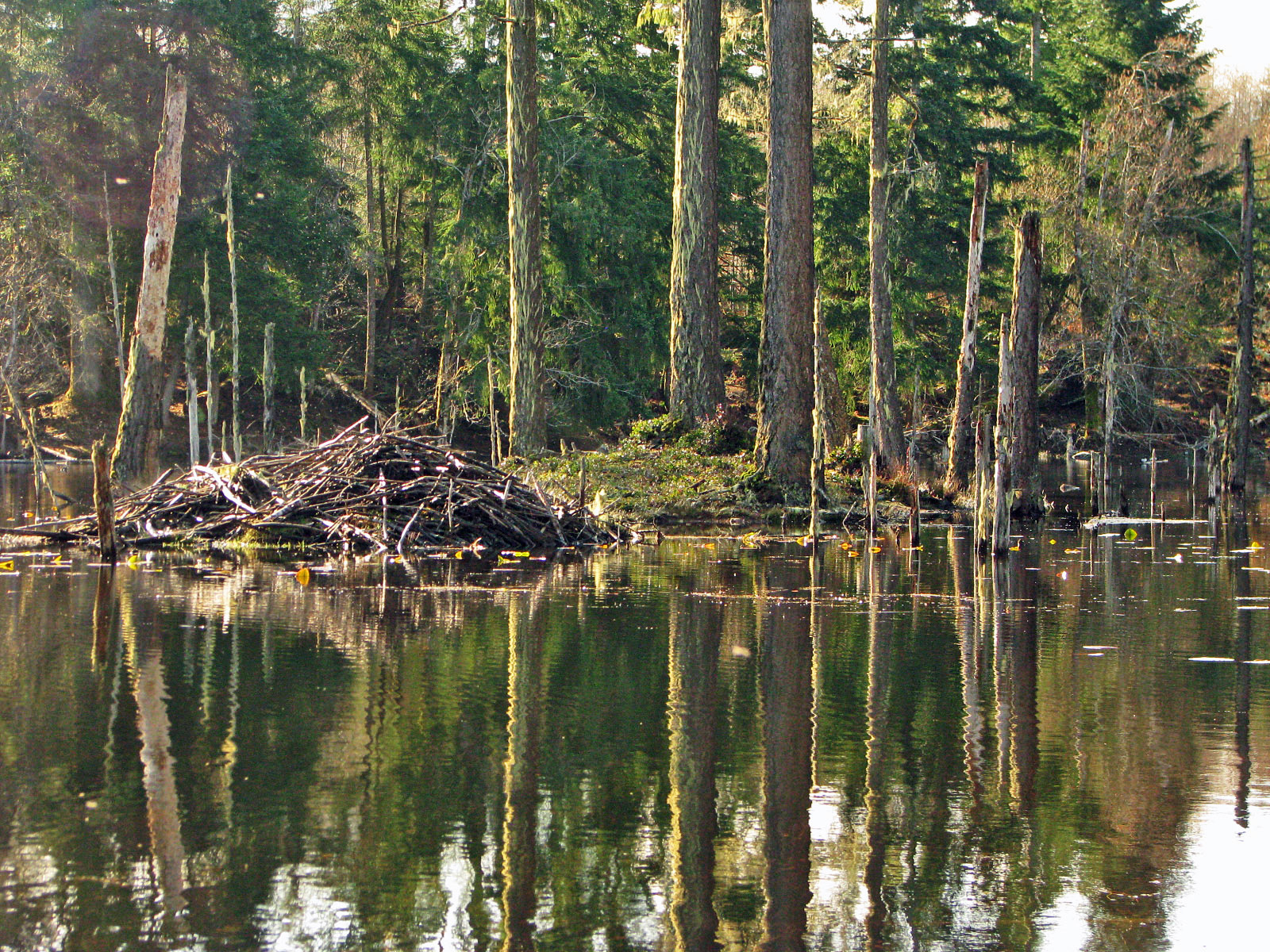
Photo: Sandy McRuer
Beavers
Beavers have lived at the ponds since at least the 1980s, and possibly longer. Their activity transformed the original marsh into a pond, submerging shoreline trees and forming small islands that now provide habitat for a variety of species.
The larger pond drains into a smaller pond, then slowly drains down under the Log Train Trail Bridge and forms the headwaters of Wolf Creek.
Why the wetlands matter
Biodiversity
Wetlands provide important habitat and breeding grounds for birds, amphibians, reptiles, fish and terrestrial wildlife.
Water
Wetlands absorb huge amounts of snowmelt and rainwater, slowly releasing this water during dry spells. Wetlands can store water, slow runoff, and help filter some pollutants and sediment.
Climate
Wetland soils and vegetation store carbon. Plant growth and moisture evaporation help preserve water availability and provide local cooling during heatwaves.
Natural resilience
Wetlands contribute to fire resistance, flood management and ecosystem health. They can help reduce the intensity and speed of wildfires.
Community value
Natural spaces can provide opportunities for learning, appreciation, and connection to nature.
The accessible ponds offer a place for nature study and for teaching children about wetlands within the city.
Biodiversity